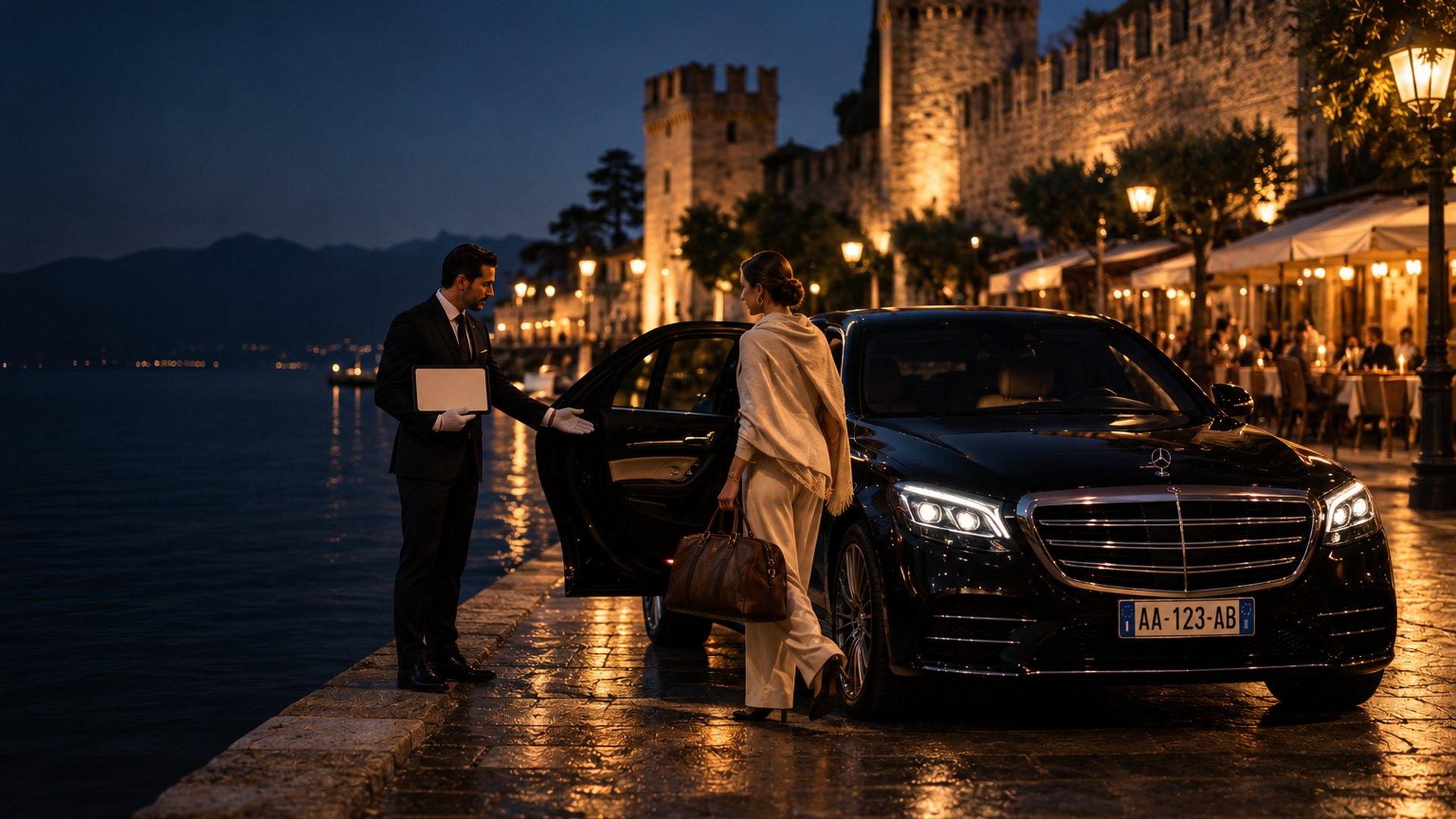
Private transfer on east Lake Garda: Lazise, Bardolino, Garda and Malcesine
The eastern shore of Lake Garda gathers some of the most requested addresses in northern Italy, from the walled harbour of Lazise to the bay of Malcesine beneath Monte Baldo. Reaching them with a private chauffeur means leaving the airport or central Milan once, with no changes, no platforms and no motorway exit to work out after a long flight. This guide sets out the real driving times from Malpensa, Linate, Bergamo Orio al Serio, Verona and Milan, then moves through what to see along the Gardesana orientale, where to eat and which events fill the calendar. It also covers the practical side: seasons, parking, limited traffic zones and the classes of vehicle available. Every detail is settled before departure, with a fixed fare agreed at booking and a driver waiting on arrival.
Key facts
- Private transfer on east Lake Garda: Lazise, Bardolino, Garda and Malcesine: one fixed fare agreed before pickup, answer to every request within 10 minutes, booking every day.
- Timing: 60 minutes of waiting included on airport arrivals, live flight tracking, meet and greet with a name sign in the arrivals hall.
- Who it is for: travellers and companies using Private transfer on east Lake Garda: Lazise, Bardolino, Garda and Malcesine, families with luggage, groups arriving in Milan for fairs, shows and meetings.
- Included in the fare: motorway tolls and Area C access, luggage assistance, child seats on request, free cancellation up to 48 hours before pickup.
- How to book: WhatsApp +39 351 788 9269, phone +39 351 788 9269 or the quote form on this page, answered within 10 minutes.
Instant chauffeur class and per-passenger calculator
Choose class, passengers and luggage: the fixed fare of the car is divided by the people sharing the ride.
Fixed fare Milan Malpensa Airport (MXP) → Milan city centre: €170 for the car, €85 per passenger per passenger with 2 sharing.
The fare is fixed for the whole car and does not change with traffic or a delayed flight. Split between passengers it usually costs less per person than separate taxis.
- Flight tracking - we follow the landing time, not the timetable
- Up to 60 minutes of waiting on arrivals, included
- Meet & greet with a name sign, in the arrivals hall
Included: 60 minutes of airport waiting, live flight tracking and meet and greet with a name sign.
Route and times: from the airports and Milan to east Lake Garda
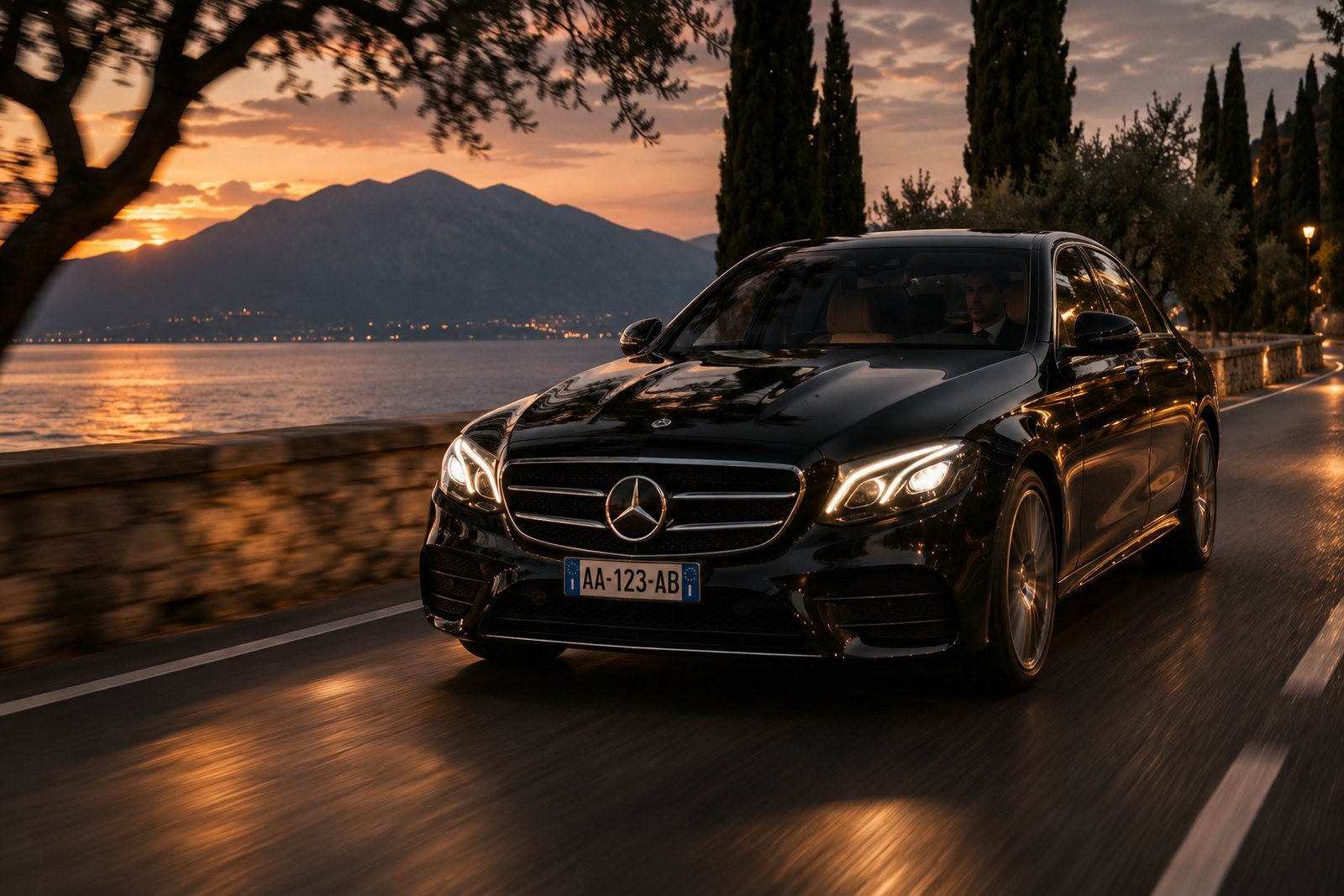
The eastern shore runs from the A4 exit at Peschiera del Garda north to the foot of Monte Baldo, and it is the stretch of lake best served by a single motorway arrival. Peschiera is the natural gateway: the fortress built on a star plan, the sanctuary of the Madonna del Frassino and the railway station on the Milan-Venice line all sit within a few minutes of the exit. From there the SS249 Gardesana orientale follows the water past Lazise, Bardolino and Torri del Benaco up to Malcesine, with the mountains on one side and the harbour towns on the other. Travelling by private car means staying in one seat from the terminal to the hotel door, instead of combining a train, a platform change and a local bus with luggage in hand. Your chauffeur knows which of the two lakeside roads is moving on the day and chooses accordingly.
Milan Malpensa is the farthest of the three main airports, about 145 kilometres from Peschiera and one hour forty-five to two hours by road, rising to roughly two hours thirty for Malcesine at the northern end of the shore. Linate sits closer to the city and to the motorway, around 120 kilometres and one hour twenty-five to Peschiera, which makes it the most convenient option for morning arrivals. Bergamo Orio al Serio is the shortest run of all, about 95 kilometres and one hour ten, ideal for the European routes that land there. In every case the same service applies: the driver tracks the flight, adjusts the pickup to the real landing time and waits in the arrivals hall with a name sign.
Verona Villafranca deserves special mention, since it sits roughly twenty minutes from Peschiera and Lazise and about an hour from Malcesine, turning a short drive into a seamless arrival on the lake. Brescia Montichiari, used mainly by charter and private flights, is around forty-five minutes from Peschiera. If you start from central Milan, expect about one hour twenty to one hour thirty to Peschiera along the A4, one hour thirty-five to Lazise and two hours to two hours fifteen to Malcesine, depending on the hour you leave. Business travellers often combine the lake with a meeting in Milan, and the same chauffeur can handle both legs in the same day. Whatever the origin, the itinerary is confirmed before departure and the timing carries a sensible margin for motorway traffic.
Real times by destination
Once you are at the Peschiera exit, the distances along the shore are short and predictable: Lazise is ten minutes, Bardolino fifteen, the town of Garda twenty-five and Torri del Benaco thirty-five. Brenzone, through the hamlet of Prada, comes at about forty-five minutes, while Malcesine closes the sequence at fifty to fifty-five minutes along the Gardesana orientale. These are driving times without stops, so a first sweep of the shore can be done in a morning if you want to see more than one town before checking in. The same figures work in reverse when you plan a dinner or an evening further along the lake.
Weekend summer traffic is the only variable worth watching, especially at midday in July and August when the lakeside road fills with cars heading for the beach towns. Sunday evenings bring a steady flow back towards Milan, and the return leg can take another twenty or thirty minutes on top of the standard time. A professional chauffeur reads those patterns early, taking the motorway or the inner alternative and adjusting the departure so that you arrive without rushing. Outside those windows, or on a weekday, the drive is as calm as the figures suggest.
Meeting point and hotel drop-off
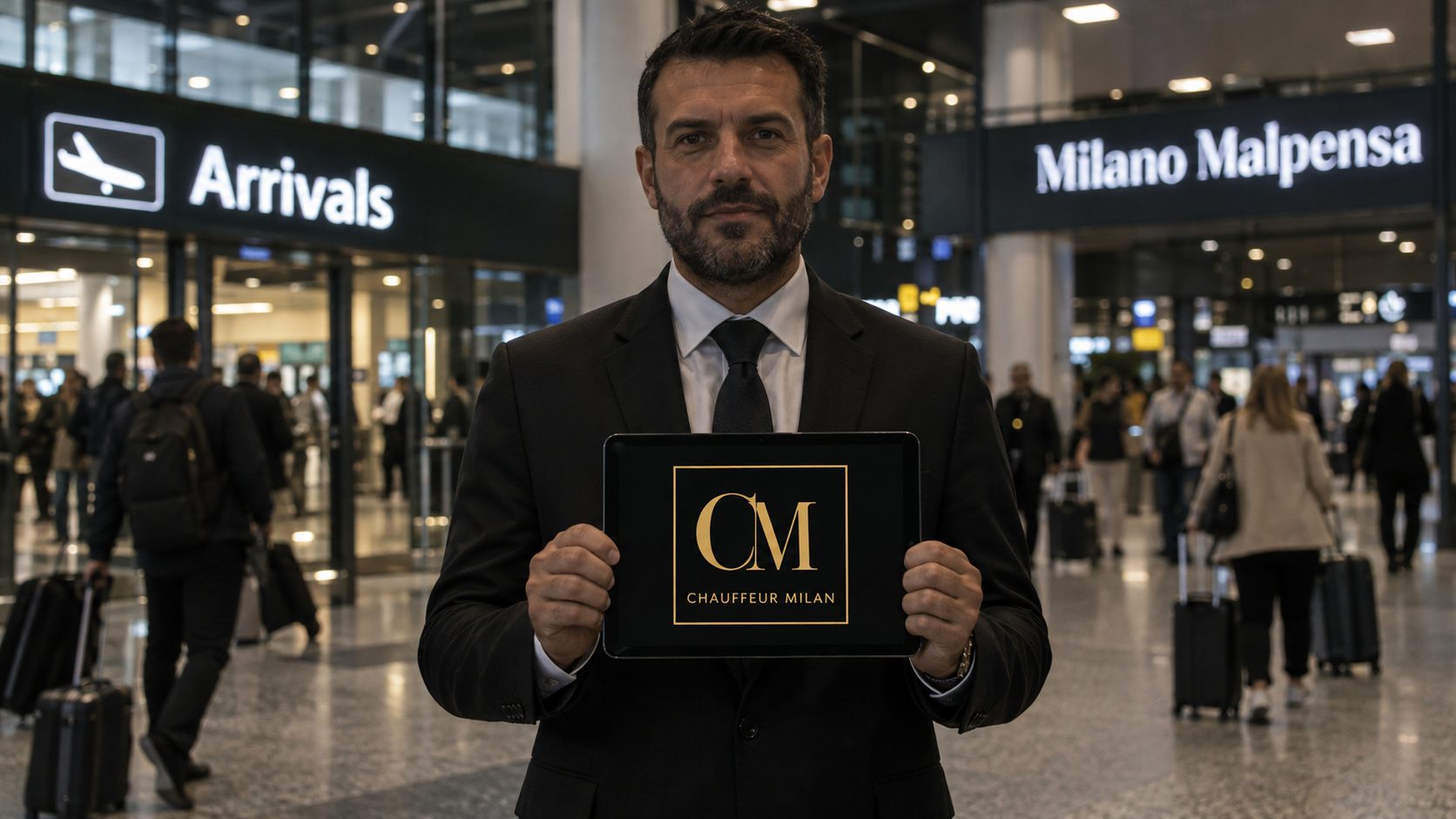
At the airport the meeting point is the arrivals hall, where your chauffeur waits with a sign showing your name and keeps the pickup aligned with the actual landing time. Waiting within the agreed limits is part of the service and is never added to the bill later, which removes the usual anxiety about a delayed flight or a slow baggage belt. Luggage moves from the carousel to the boot with help, and child seats or extra room for bulky bags only need to be requested when you book. The walk from the belt to the car is the only part of the journey that still belongs to you.
On the lake the drop-off follows the limited traffic zone of each town, so the car stops at the closest point a vehicle can reach to your address. In Lazise, Bardolino, Garda and Malcesine that usually means the edge of the walls or the street beside the harbour, a short walk from reception with your bags handed over. Hotels outside the historic centres are reached door to door, with the chauffeur pulling up at the entrance and waiting until you are settled. The same rule applies on departure, where the pickup is set at the nearest reachable spot at the time agreed the evening before.
What to see on the eastern shore of Lake Garda
The southern part of the shore belongs to Peschiera del Garda, where the fortress on a star plan rises above the canal network and the sanctuary of the Madonna Frassino draws visitors a few minutes outside town. The station here joins the Milan-Venice line, but travellers who prefer not to change trains twice tend to appreciate the car even more. From Peschiera, Verona is about twenty-five minutes away, with the Arena and its summer opera season, and Parco Giardino Sigurtà at Valeggio sul Mincio lies around twenty minutes inland. Both make excellent half-day additions to a week on the lake.
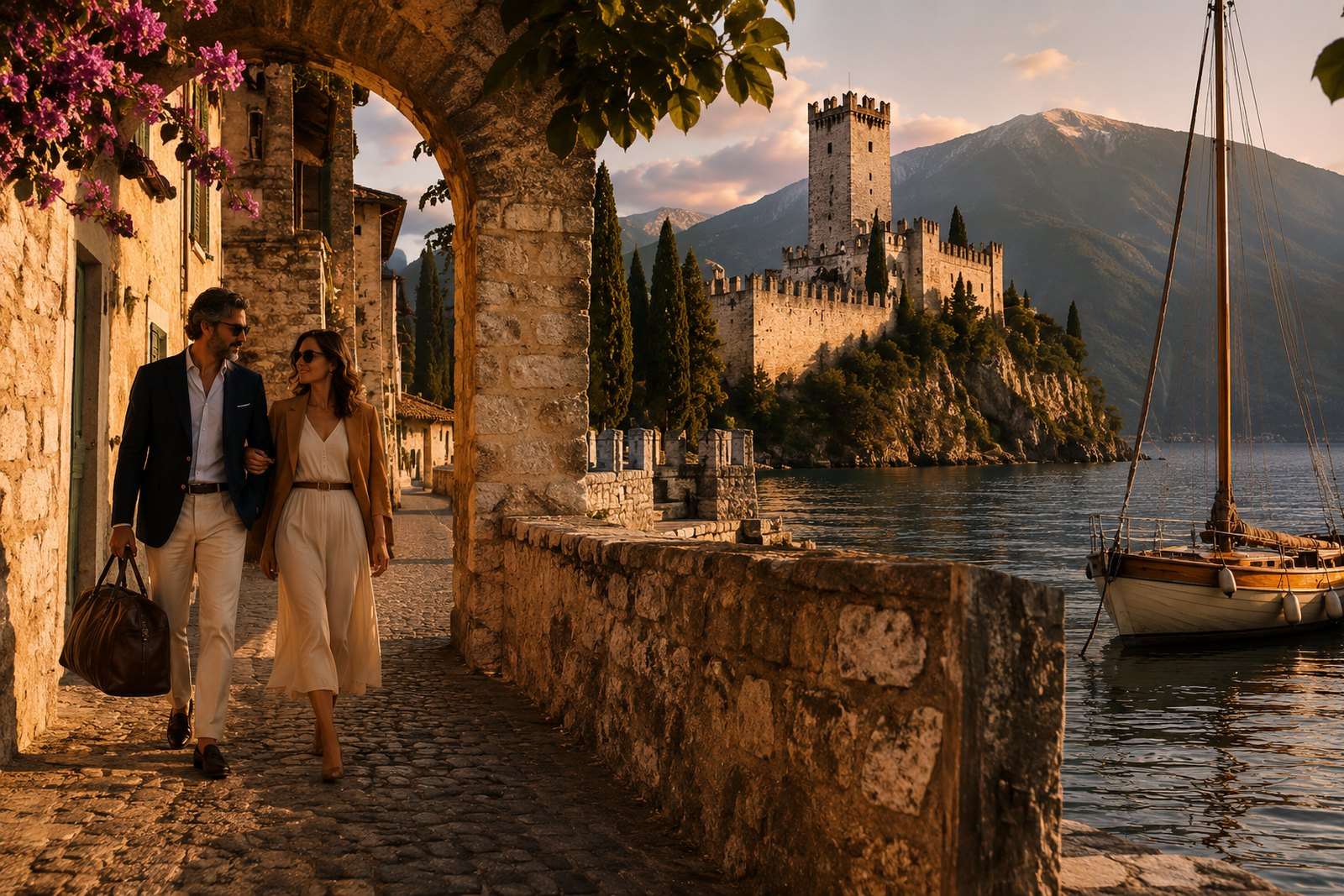
Moving north, Lazise keeps its medieval walls almost intact around the harbour, with the Scaliger castle and the Dogana Veneta watching over the old port. Bardolino follows after ten minutes, at the centre of the local wine district, then the town of Garda spreads below its Rocca with a view over the water. Viale dei Colli offers a shaded panoramic walk above the lake, and Punta San Vigilio lies about ten minutes to the north, at the tip of a quiet peninsula. Torri del Benaco closes this middle section with its own Scaliger castle, a lemon house and the civic museum of the Benaco.
The northern stretch is wilder: Brenzone sul Garda spreads across the hamlets of Prada and Campo along an unhurried lakeside, with paths climbing straight into Monte Baldo. Malcesine is the highlight, a knot of pebbled streets below a Scaliger castle that now houses the Monte Baldo museum, with windsurfers and sailing boats crossing the bay in front of it. Beyond the village the cable car lifts visitors to Tratto Spino at about 1760 metres, where the view runs from the Dolomites to the southern basin of the lake. With a car and a driver, all of these stops can be chained into a single day at the pace you prefer.
Lazise, Bardolino and Garda
Lazise rewards a slow walk: the medieval walls encircle a compact centre, the castle stands at the end of the promenade and the Dogana Veneta, the old customs house, still marks the entrance to the harbour. Five minutes from the walls, Colà holds the Parco Termale del Garda with its Villa dei Cedri, a thermal park set among centuries-old cedar trees where an afternoon can disappear easily. Families have another reason to stop here, since Castelnuovo del Garda lies five to ten minutes away with Gardaland, Caneva World and Movieland grouped together. Having a car means visiting these sights in the order that suits you, without a timetable dictating the day.
Bardolino is where the eastern shore tastes of wine, at the heart of the Bardolino DOC reds and the Chiaretto rosato produced around the hills above the lake. The Oil Museum in Cisano explains the other local treasure, the extra virgin olive oil that carries the Garda denomination, and the Festa dell'Uva fills the streets in early October with the new vintage. A few minutes further on, the town of Garda climbs from its promenade to the Rocca, a fortress whose terrace frames the bay and the hills beyond. Viale dei Colli starts nearby for a walk above the rooftops, while Punta San Vigilio offers the quieter option of a cypress-lined lakeside ten minutes to the north.
Malcesine and Monte Baldo
Malcesine looks like a stage set, with its Scaliger castle perched on the rock above the harbour and the Monte Baldo museum inside, charting the mountain that defines the town. Below it, the centre is a maze of pebbled lanes, small squares and terraces that reach the water within a couple of turns, and the promenade stays lively well into the evening. The bay is one of the best spots on the lake for windsurfing and sailing, thanks to the afternoon breeze that funnels down the valley. A private transfer lets you arrive with your gear, leave it in the car and explore on foot.
The cable car is the second half of the experience: the cabins rotate during the ascent so that the view keeps changing, and the top station at Tratto Spino sits at about 1760 metres. From there the ridge opens towards the Dolomites, the lake spreads out below and walking paths branch into the meadows of Monte Baldo. In winter the same slopes hold snow, which turns a quiet lakeside break into a mountain day above the water. Lower down, the trails that start behind Brenzone offer the same mountain air without the ascent, for a gentler hour among the chestnut woods.
Events, flavours and life on east Lake Garda
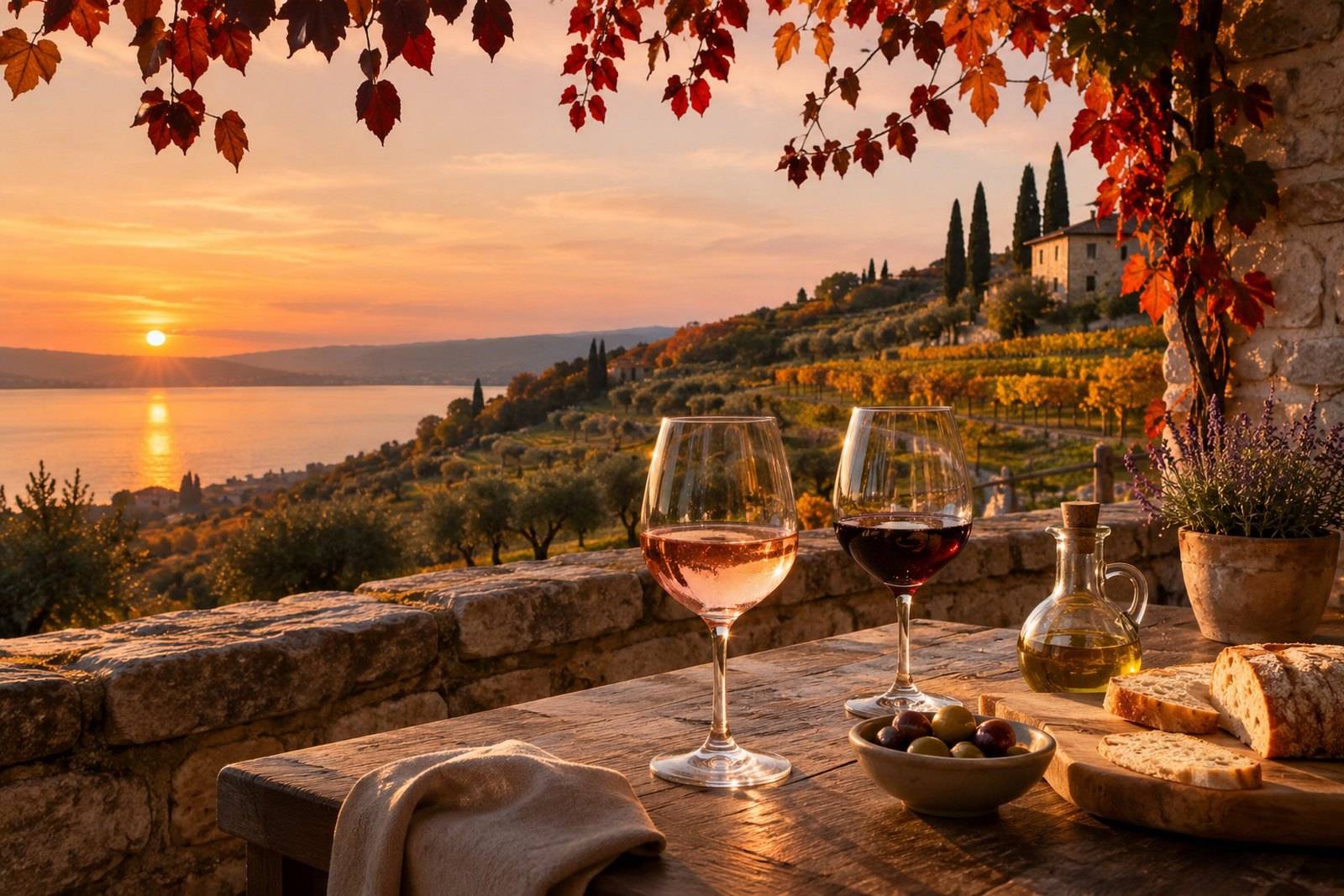
The cooking of the east shore starts with the lake: freshwater fish served whole or grilled, polenta as the constant companion, and the extra virgin olive oil of the Garda zone poured over everything it can improve. Bardolino DOC red and Chiaretto rosato are the wines that appear on every list along the shore, light enough for a warm terrace and serious enough to travel home in a case. Nothing here needs booking weeks in advance, and a good meal can be built around whatever the market brought in that morning. The rhythm of a day on the lake is written around lunch, a walk and a late dinner.
Beyond the plate, the shore keeps a steady calendar of small festivals, harvest moments and open-air evenings that give each town its own reason to return. Bardolino's Festa dell'Uva in early October is the clearest example, when the streets fill with the new wine and the season closes with a party. Across the region and twenty-five minutes from Peschiera, Verona adds the Arena and its summer opera season to any itinerary. Winter shifts the programme to Christmas markets along the promenades and a dusting of snow on Monte Baldo, which keeps the lake interesting out of season.
A private car is what makes an evening programme realistic, because a dinner in Bardolino, a concert in Verona and a late return to a hotel near Malcesine can all be planned without checking the last bus. The chauffeur waits at the agreed time, takes you back along the shore and drops you at the nearest reachable point to the door. The same applies to a day that starts at the thermal park of Colà and ends with the sunset at Punta San Vigilio. Nothing has to be abandoned because the journey home would be complicated.
Cuisine and wines
Lake fish is the signature: perch, trout and whitefish cooked simply, fried as a starter or grilled with herbs, always finished with local oil. Polenta appears in every version, soft under the fish or sliced and crisped, and it carries the sauces that the region does best. The olive oil with the Garda denomination comes from groves that climb the hills behind Bardolino and Lazise, where the microclimate lets olives grow further north than most people expect. Tasting it beside the lake, still peppery and fresh, is one of the quiet pleasures of the shore.
On the wine side, Bardolino DOC is the red that defines the hills on the eastern bank, made from corvina and rondinella and served slightly cool on a terrace. Chiaretto, its pale rosato sibling, has become the summer wine of the whole lake, produced in the same hills and poured from spring onwards. Small cellars around Bardolino and Cisano open their doors for tastings, and bottles travel home easily in the boot of a car. Choosing a driver for the day means nobody at the table has to abstain.
The events calendar
Spring is when the shore wakes up: gardens open, terraces fill and the walk along Viale dei Colli is comfortable again by May. Summer brings the busiest calendar, with harbour events, evening markets and open-air concerts in most towns, alongside the opera season that runs at the Arena in Verona from June onwards. Weekend traffic rises with the crowd, so a weekday arrival in June or September gives the same weather with far more calm.
Autumn belongs to the harvest, headlined by the Festa dell'Uva in Bardolino during the first days of October, when the new wine is poured in the streets and the hills behind the lake turn amber. Olives are picked at the same time, and the mills that follow the traditional method start pressing. Winter is quieter but never closed: Christmas markets line the promenades, the castles stay open and snow settles on Monte Baldo above Malcesine. Even in January the shore keeps its cafés and its walks, which suits travellers who prefer the lake without the crowds.
Travel tips: when to go, parking and ZTL
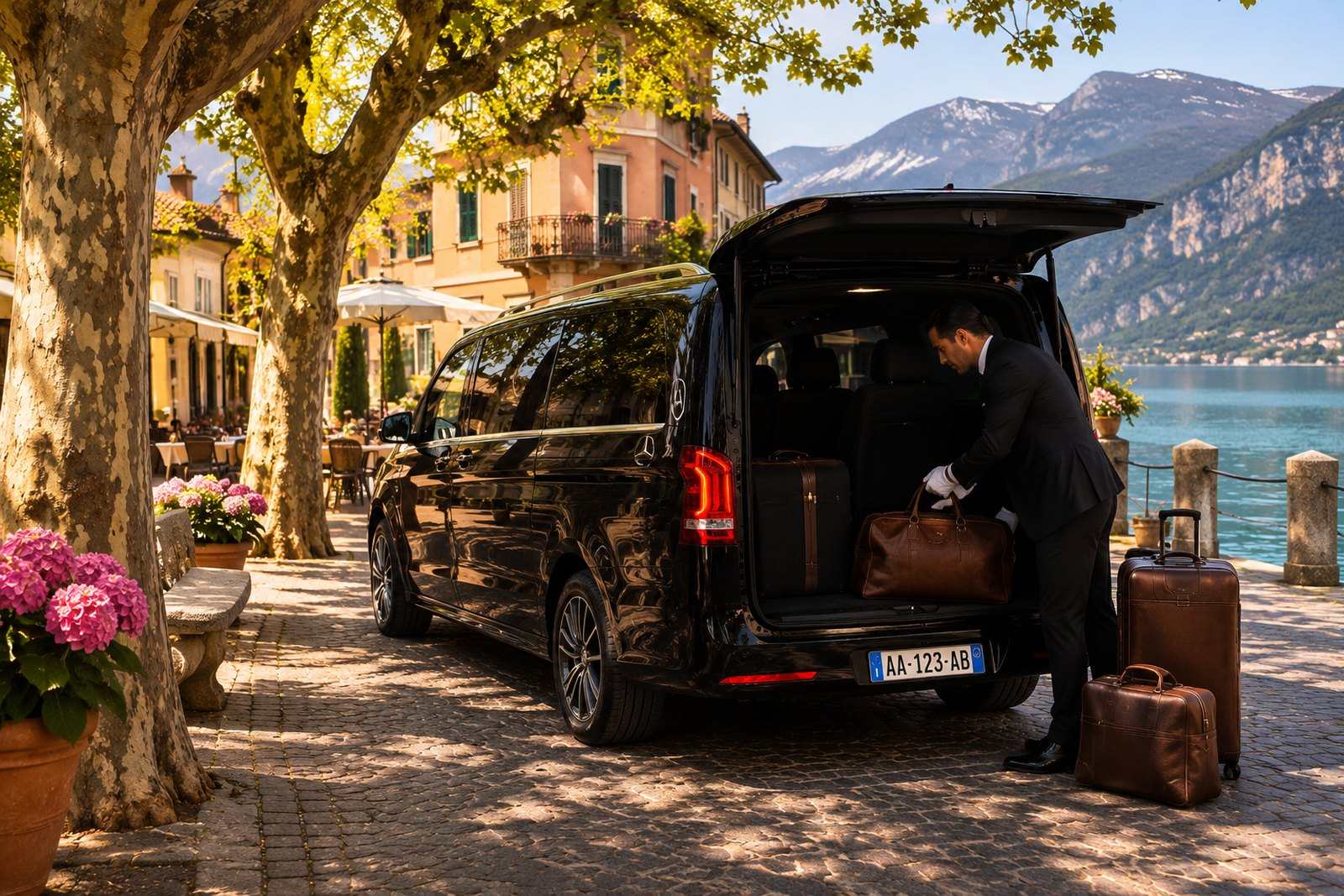
The eastern shore enjoys a mild temper compared with the rest of northern Italy, and the choice of month changes the trip more than the choice of hotel. May and June bring warm days, open water and quiet roads, while September holds the temperature after the summer crowds have gone. July and August are the busiest weeks, especially at weekends, when the Gardesana fills and parking inside the historic centres becomes a puzzle. Winter is calm and rather beautiful, with markets, empty promenades and snow on the peaks above the lake.
The practical side of the drive is simple: the A4 Milan-Venice motorway delivers you to the Peschiera del Garda exit, and the SS249 takes over from there along the water. Fuel, tolls and the route itself are the driver's problem, not yours, and the fixed fare agreed at booking already covers them. Traffic is the only element that moves, and it moves predictably, concentrated on weekend midday hours in summer and on Sunday evenings heading back to Milan. Setting off early in the morning or later in the afternoon usually solves it before it starts.
Luggage deserves a mention, since a lake holiday means bags for the beach, for the mountains and for dinner. Vans and minibuses keep everything inside the cabin with the passengers, instead of tying cases to a roof rack or leaving them on a platform. Child seats, extra space for sports gear and room for instruments only need to be requested at booking. Everything else, from the exact address to the flight number, is confirmed in advance so that the day runs without a single phone call.
When to travel
May and June are the sweet spot of the year on the eastern shore: the water is already swimmable, the hills are green, the roads are open and every terrace has a table. September behaves almost as well, with warm lake water, softer light and a return to the calm of spring. For a week of swimming and long lunches, either of these windows beats the heart of summer. Families tied to school holidays tend to arrive in July and August, and simply plan the driving around the busiest hours.
August is the busiest month, with weekend traffic along the Gardesana and full parking in Lazise, Bardolino and Malcesine. Sunday evening is the moment when the road points firmly towards Milan, so leaving the lake a couple of hours earlier saves both time and patience. Winter suits travellers who want the shore to themselves: Christmas markets, quiet castles, an afternoon at the thermal park and snow on Monte Baldo above Malcesine. Whenever you travel, the transfer time is agreed in advance and adjusted to the season, so the departure never depends on guesswork.
Parking and ZTL
The historic centres of Lazise, Bardolino, the town of Garda and Malcesine all operate limited traffic zones, with access restricted at weekends in the summer months and at peak hours. Signs mark the boundaries and cameras enforce them, so an unexpected turn can turn into a fine that arrives weeks later. Entering on foot is the simplest way to visit, which is exactly what a drop-off at the nearest reachable point allows. The car stops as close as the rules permit, and your bags travel the last few metres with you.
Outside the walls the situation is easier, and your chauffeur knows which street or lakeside lay-by is free at that hour of the day. In the larger towns, parking near the harbour or the promenade costs little patience and saves a long walk in the midday sun. For evening plans, being collected at the door beats hunting for a space after dinner once the zones have closed again. The same logic applies on departure, where the pickup time and point are confirmed the evening before with traffic and restrictions already taken into account.
Why choose a private transfer on east Lake Garda
The train reaches Peschiera del Garda on the Milan-Venice line, but the last part of the journey still has to be arranged, and with luggage it becomes the least pleasant stretch of the trip. A private transfer removes that seam entirely: one vehicle, one driver, one fixed fare, from the arrivals hall to the hotel entrance. On the eastern shore, where the towns are strung along a single road, door-to-door travel also means arriving before the parking question becomes urgent. It is the difference between reaching the lake and starting the holiday at the same moment.
Chauffeur Milan works with professional NCC drivers who know the A4, the Gardesana orientale and the summer behaviour of every junction between Peschiera and Malcesine. Flight monitoring keeps the pickup aligned with reality, the meet and greet with a name sign removes any doubt about where to go, and luggage assistance covers the distance from the terminal to the car. The fare is agreed before departure, with taxes and tolls inside it and waiting handled within the limits set at booking. Nothing about the journey is left to be negotiated on arrival.
A private transfer is also the most practical base for exploring, because the same car can take you from Lazise to the thermal park, then up to Bardolino for an afternoon of tasting and back along the shore for dinner. Day trips to Verona, to Parco Giardino Sigurtà or around the whole lake are simply a matter of deciding the order. Waiting time is agreed in advance, so a longer stop never turns into a discussion about the meter. For groups, the same service scales from a saloon to a minibus without changing the standard of the day.
Vehicle classes
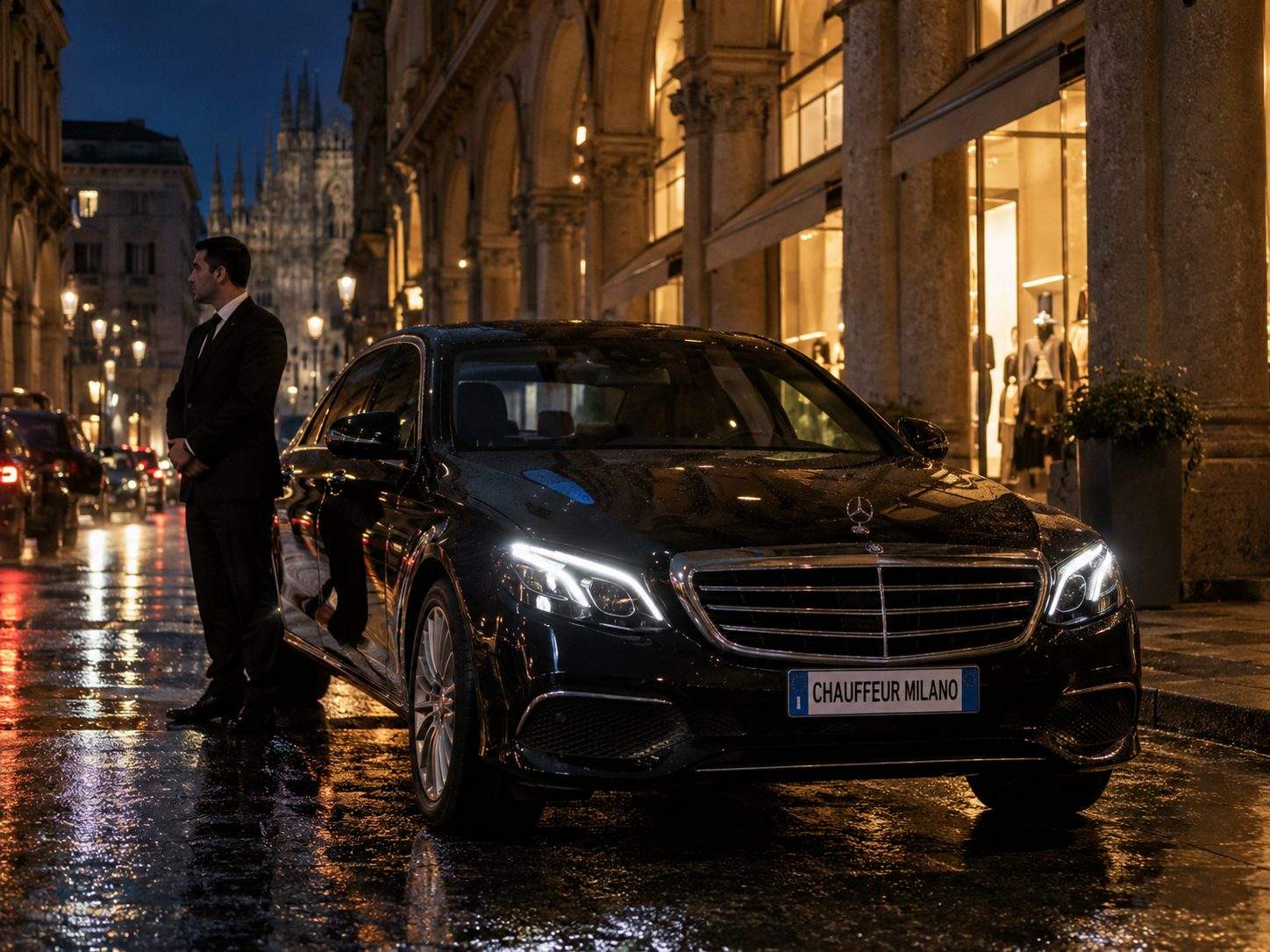
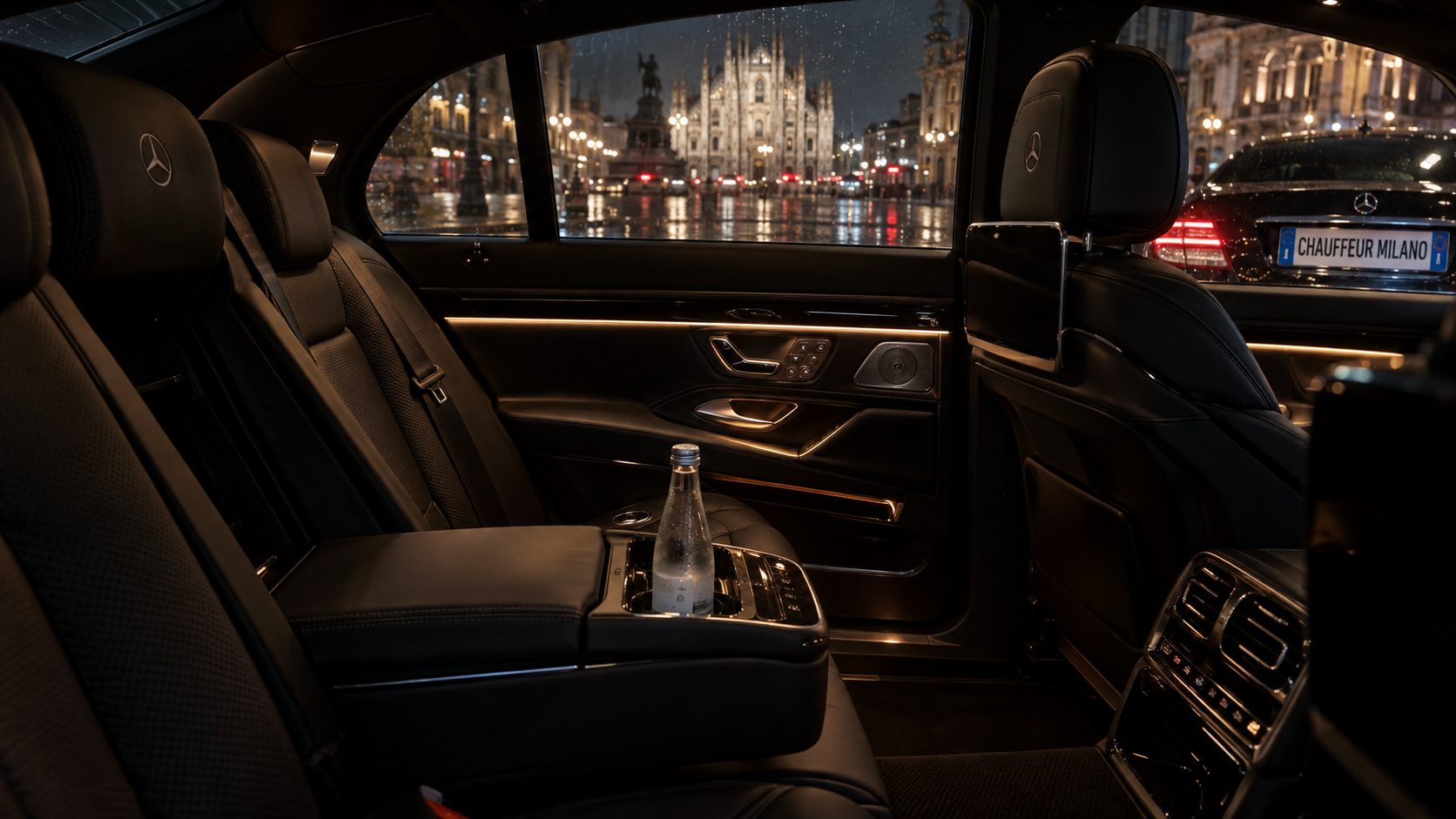
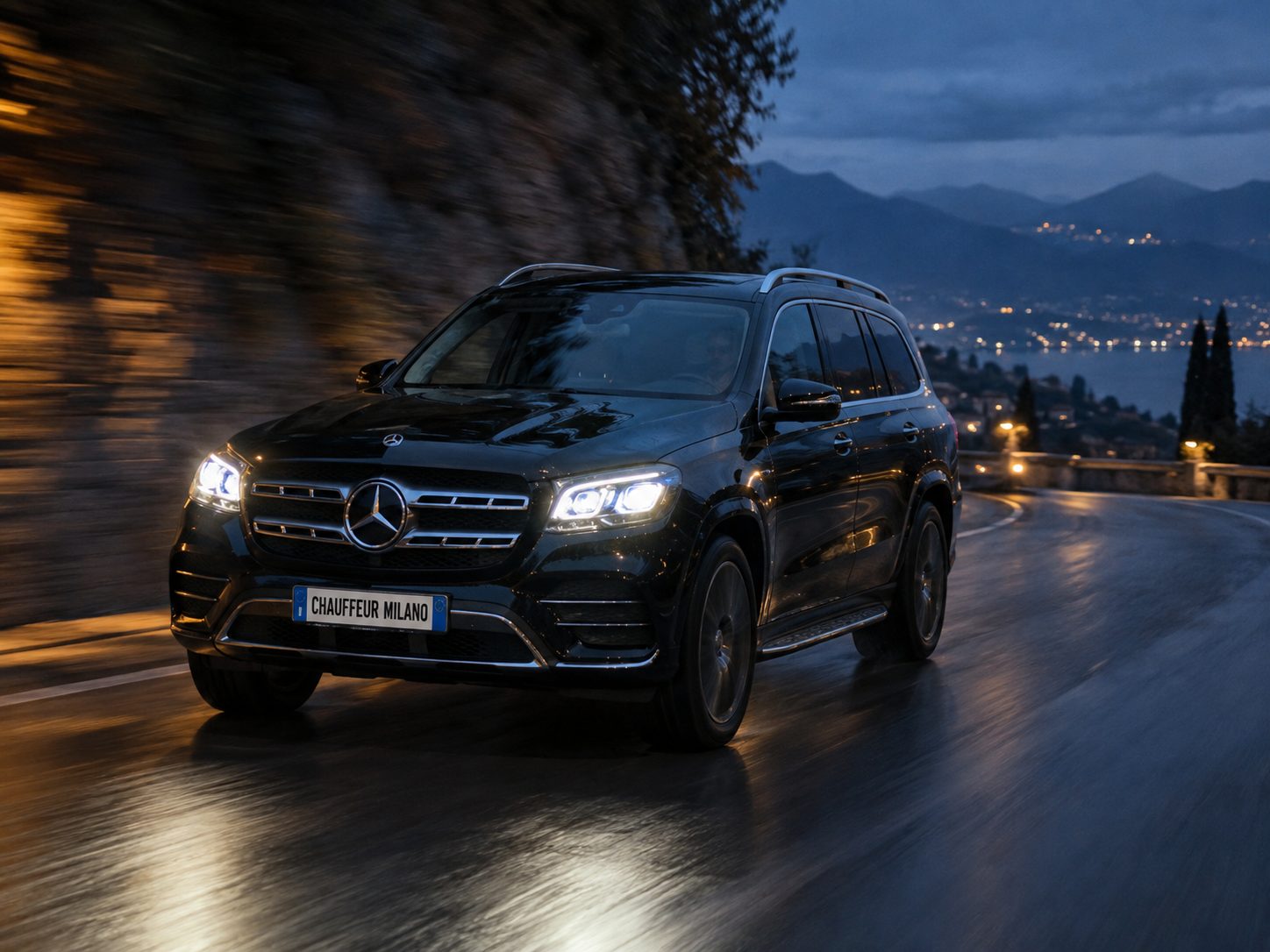
The fleet follows the shape of the trip: the Mercedes E-Class for business travel, the S-Class for first-class comfort, the V-Class van for up to seven passengers and a minibus when the group grows larger. Every vehicle comes with Wi-Fi, bottled water, USB sockets and climate control, so the hour and a half from Linate or the two hours from Malpensa pass as working time or as rest. Models are described as latest generation or similar, which means a young, silent, well-maintained car rather than a specific badge. Child seats are available on request at booking.
Choosing the class is mostly a question of how much room you want around you. A saloon suits a couple with two cases, while the V-Class keeps seven passengers, their bags and a pushchair comfortable at the same time. Larger families and golf or ski groups tend to take the minibus, which travels with the same driver and the same fare structure. Whatever the choice, the vehicle is confirmed before departure and can be changed if the plans change.
Fixed fare
The fare is fixed and agreed before departure, which means the figure you accept at booking is the figure that stands at the end of the journey. Tolls, taxes and the airport waiting within the agreed limits are already inside it, and traffic cannot push it upwards. A delayed flight simply moves the pickup, since the driver follows the flight and waits without a supplement for the first stretch. There is nothing to calculate on the motorway and nothing to negotiate at the hotel door.
The fixed fare also makes planning easier when the trip involves several stops, a change of destination or a later return than expected. Time, route and vehicle class can be adjusted through customer service before the service begins, and the figure is restated at that point. For a week on the lake, with departures and arrivals spread across the days, knowing the cost in advance is worth as much as the comfort itself. It turns the transfer into part of the holiday rather than one of its administrative tasks.
How long does it take to reach Lazise and Malcesine from the airports?
From the Peschiera exit on the A4, Lazise is ten minutes and Malcesine fifty to fifty-five along the Gardesana orientale. Malpensa needs about one hour forty-five to two hours to Peschiera and two hours thirty to Malcesine, Linate about one hour twenty-five and Orio al Serio about one hour ten. Verona Villafranca is twenty minutes from Peschiera and about an hour from Malcesine.
Is the fare fixed even in summer traffic or with a delayed flight?
Yes, the fare is agreed at booking and includes tolls, taxes and waiting within the agreed limits. Traffic, detours and flight delays never change it, because the driver follows the flight and adjusts the pickup. The total is settled before you travel, not at the end of the ride.
Can the car take me to my hotel inside the ZTL of Lazise or Malcesine?
Yes, the chauffeur drops you at the closest point a vehicle can reach to your address, which in the walled centres means the edge of the historic centre or the street beside the harbour. Your bags are carried the final metres, and the same point is used for pickup. Nothing has to be arranged on arrival.
Which vehicle should I choose for a family of five with luggage?
The V-Class van is the natural choice, seating up to seven passengers with room for the cases in the cabin, and child seats are provided on request at booking. Couples or solo travellers who prefer a saloon can take the Mercedes E-Class for business or the S-Class for first-class comfort. Larger groups travel by minibus with the same service standards.
What can I see along the eastern shore in a single day?
A good loop starts at the walls of Lazise, continues through Bardolino and the town of Garda, stops at the castle of Torri del Benaco and finishes in Malcesine with the cable car to Monte Baldo. Verona, twenty-five minutes from Peschiera, and Parco Giardino Sigurtà, about twenty minutes inland, fit easily into the same programme. The driver waits, so the order stays yours.
When is the best time of year to travel to east Lake Garda?
May, June and September are the finest months, with warm days, open water and quiet roads. July and August are busiest at weekends, especially on Sunday evenings when the traffic points back to Milan. Winter is calm as well, with Christmas markets along the promenades and snow on Monte Baldo.
Does the service cover airports, stations and day trips along the lake?
Yes, transfers run from Malpensa, Linate, Bergamo Orio al Serio, Verona Villafranca, Brescia Montichiari and central Milan, as well as from the Peschiera railway station on the Milan-Venice line. Day trips along the shore, to Verona or to the thermal park at Colà can be booked with waiting time agreed in advance. Flight monitoring, meet and greet and luggage assistance are part of every ride.
A fixed quote, within ten minutes.
Flight, date, addresses and luggage: with those four things we answer with a price, not with a question.
- 01Route and service
- 02Who is booking
- 03Payment
Free cancellation up to 48 hours before pickup.
Immediate confirmation of the service
Secure payment with Stripe
Extra luggage may incur a surcharge on the transfer.
Recommended
Lago di Garda
Services and transfers
Private transfer on east Lake Garda: Lazise, Bardolino, Garda and Malcesine: services and areas
Pages that go with this one: the services used on a Private transfer on east Lake Garda: Lazise, Bardolino, Garda and Malcesine trip and the areas we serve every day around Milan.